

Yiddish Voices for Change: Arts and Politics in the Early 20th Century
Yiddish Voices for Change: Arts and Politics in the Early 20th Century
"Yiddish Voices for Change: Arts and Politics in the Early 20th Century” will feature an international cohort of speakers on topics related to the radical transformation of the literary and performing arts, transformative political movements, and the intersections of intellectual, political, and aesthetic commitments in early 20th century Yiddish-speaking society.
We welcome you to join us for in-person sessions on Sunday and Monday, and for a global Zoom session midday Monday.
The Jonathan Sunshine Yiddish Program Support Fund was established by Jonathan Sunshine’s family to honor him on his 80th birthday. Jonathan studied Yiddish as a youth in a Workmen’s Circle Schule (school) and also heard it spoken by his grandparents; his parents were also fluent. He started taking Yiddish classes again as an adult and joined first one and eventually multiple Yiddish reading groups. These activities renewed his love for Yiddish and fostered a deep appreciation for and commitment to Yiddish language, literature and culture. The Sunshine Funds at University of Maryland support activities, including conferences and travel, to broaden interest in and access to the study of Yiddish language and culture among University of Maryland students as well as the larger DMV community.
Sunday, April 26 7:00 - 8:30 pm (1126 Taliaferro Hall- Library)
"Reverberations in Art: The Lasting Implications of Radical Yiddish Theater"
Agnieszka Legutko, Transmodernist Dybbuks: Art, Gender and Memory Politics in An-sky's Dybbuk Adaptations
Diego Rotman, The Subversive Power of Yiddish Language on Stage: Dzigan, Shumacher, Dybbuks, and Puppets
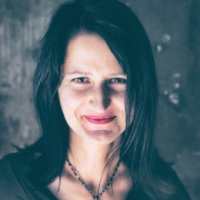
Agnieszka Legutko is a Senior Lecturer in Yiddish and Director of the Yiddish Language Program at Columbia University. Her scholarship centers on modern Yiddish literature, language, and culture, women and gender studies, spirit possession in Judaism, as well as in American and European modern Jewish literatures, theater, and film. She is the author of Krakow’s Kazimierz: Town of Partings and Returns, a historical guidebook to the Jewish Quarter of Krakow (in English and Polish 2004, 2009), and her publications have appeared in several journals and essay collections on Yiddish literature and Culture, such as Cwiszn, Bridges, Lilith, and Jewish Quarterly. Her digital humanities projects include: Mapping Yiddish New York, an online platform featuring student-generated entries on the cultural Yiddish history of the city, and The Grosbard Project, an audio archive of Hertz Grosbard's "word concerts" of Yiddish literature. Her current scholarship explores the trope of dybbuk possession and trauma in transnational modern Jewish cultures.
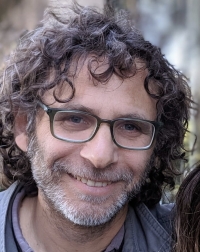
Diego Rotman is a Senior Lecturer in the Department of Theater Studies at the Hebrew University of Jerusalem, where he served as department head from 2019 to 2024. His research focuses on performative practices in historiography, contemporary art, Jewish material culture, Yiddish theatre, folklore, and research creation projects. His book The Yiddish Stage as a Temporary Home – Dzigan and Shumacher’s Satirical Theater (1927–1980) (De Gruyter, 2021; Magnes, 2017) won the 2019 Shapiro Award for Best Book in Israel Studies. He was a Visiting Professor at the Anne Tanenbaum Center for Jewish Studies (2025–2026). He is currently a Visiting Professor at the School of Cities, University of Toronto, and an Associate Researcher at the Center for Jewish Studies, York University (2025–2027).
Monday, April 27 9:00 - 10:30 am (1126 Taliaferro Hall- Library )
"Politics and Poetry in the World of Yiddish Workers"
William Pimlott, Britain's Yiddish Antifascist Moment: The Worker's Circle Takes Cable Street Global
Matthew Johnson, How does a machine come to think?: The svetshop poets on immiseration and revolt
William Pimlott is the inaugural Research Fellow at the New York University Center for the Study of Antisemitism. He recently completed his PhD on the Yiddish press in Britain, at UCL, and subsequently held two research fellowships at the University of London (at Birkbeck and Royal Holloway colleges respectively). Dr Pimlott has published articles on Yiddish history-making in Britain, on the South African Yiddish press and Yiddish art history in Jewish Social Studies, Jewish Historical Studies and Shofar respectively. He recently completed a year as the Dina Abramowicz Emerging Scholar Postdoctoral Fellow at the YIVO institute New York (2024-2025). He is currently working on a monograph manuscript provisionally entitled: A Strange Tongued People: The Rise and Fall of Yiddish in Britain, 1880-1980.
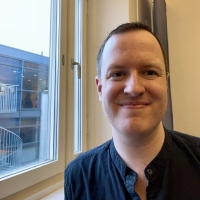
Matt Johnson is Assistant Professor in the Department of German, Nordic, and Slavic+ and affiliate faculty in the Center for Jewish Studies at the University of Wisconsin-Madison. He serves on the editorial team of In geveb: A Journal of Yiddish Studies and is currently completing a book project, with the working title Faltering Language: On the Archives of Yiddish and German Literature.
Monday, April 27 11 am - 1:00 pm
Global Zoom Session: " Anarchism and Radical Modernism"
Join us for a watch-party in 1126 Taliaferro Hall- Library.
Kamil Kijek, Modern and Radical: Yiddish and other Languages in the Lives of Polish Jewish Youth in Interwar Poland
Anna Elena Torres, Multitongued Languaging: Anarchist Language Politics
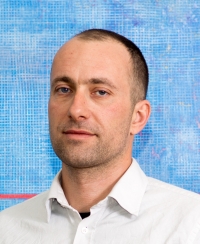
Kamil Kijek is an Assistant Professor at Taube Department of Jewish Studies, University of Wrocław, Poland. He has been a Prins Foundation postdoctoral fellow at the Center for Jewish History in New York and Sosland Family Fellow at the Jack, Joseph and Morton Mandel Center for Advanced Holocaust Studies at the United States Holocaust Museum in Washington DC, as well as Gerda Henkel Research Fellow at the Wiener Wiesenthal Institute for Holocaust Studies and Senior Research Fellow at the Center for Holocaust Studies in Munich. His current book is entitled Polish Shtetl after the Holocaust? Cold War, Jewish World and Jewish Community of Dzierżoniów, 1945-1950.
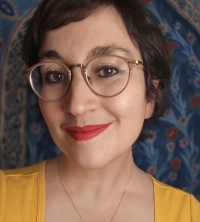
Anna Elena Torres is the author of Horizons Blossom, Borders Vanish: Anarchism and Yiddish Literature (Yale University Press, 2024), A Bear Flew By: Animality in Yiddish Arts and Literature (Rutgers University Press, forthcoming), and the co-editor of With Freedom in Our Ears: Histories of Jewish Anarchism (University of Illinois Press, 2023). Torres's work has appeared in The Oxford Handbook of Queer Modernisms, Prooftexts, Jewish Quarterly Review, Nashim, make/shift: a journal of feminisms in motion, In geveb, Comparative Literature, and elsewhere. Torres’s collaborative art practice includes work as a muralist, contributor to the Yiddishland Pavilion at the Venice Biennale (2022), and commissioned artist by the POLIN Museum, Warsaw.
Monday, April 27 2:30 - 4:00 pm (1126 Taliaferro Hall- Library)
Afternoon tea and concluding discussion: "Reflections on Radical Yiddish"
Adi Mahalel, Radical Yiddish: Reflections and Predictions"
Dr. Adi Mahalel, Visiting Assistant Professor of Yiddish Studies, received his doctoral degree from Columbia University. He is the author of The Radical Isaac: I. L. Peretz and the Rise of Jewish Socialism and the newly-released translation of Hanan Ayalti’s novel Boom and Chains: A Yiddish Novel Set in Israel/Palestine. His research interests include modern Hebrew and Yiddish literatures, Jewish cultures in modern times, Israeli culture, film and media studies, and the intersection of culture and politics. He has taught courses on Jewish culture and language at Columbia University, McGill University, and the YIVO Institute.
Get Tickets
Registration (Free event)Event Dates
-
Sunday, Apr 26, 2026 7:00 pm04/26/26 19:00:00 04/26/26 20:30:00 America/New_York Yiddish Voices for Change: Arts and Politics in the Early 20th Century
"Yiddish Voices for Change: Arts and Politics in the Early 20th Century” will feature an international cohort of speakers on topics related to the radical transformation of the literary and performing arts, transformative political movements, and the intersections of intellectual, political, and aesthetic commitments in early 20th century Yiddish-speaking society.
We welcome you to join us for in-person sessions on Sunday and Monday, and for a global Zoom session midday Monday.
The Jonathan Sunshine Yiddish Program Support Fund was established by Jonathan Sunshine’s family to honor him on his 80th birthday. Jonathan studied Yiddish as a youth in a Workmen’s Circle Schule (school) and also heard it spoken by his grandparents; his parents were also fluent. He started taking Yiddish classes again as an adult and joined first one and eventually multiple Yiddish reading groups. These activities renewed his love for Yiddish and fostered a deep appreciation for and commitment to Yiddish language, literature and culture. The Sunshine Funds at University of Maryland support activities, including conferences and travel, to broaden interest in and access to the study of Yiddish language and culture among University of Maryland students as well as the larger DMV community.
Sunday, April 26 7:00 - 8:30 pm (1126 Taliaferro Hall- Library)
"Reverberations in Art: The Lasting Implications of Radical Yiddish Theater"
Agnieszka Legutko, Transmodernist Dybbuks: Art, Gender and Memory Politics in An-sky's Dybbuk Adaptations
Diego Rotman, The Subversive Power of Yiddish Language on Stage: Dzigan, Shumacher, Dybbuks, and Puppets
Agnieszka Legutko is a Senior Lecturer in Yiddish and Director of the Yiddish Language Program at Columbia University. Her scholarship centers on modern Yiddish literature, language, and culture, women and gender studies, spirit possession in Judaism, as well as in American and European modern Jewish literatures, theater, and film. She is the author of Krakow’s Kazimierz: Town of Partings and Returns, a historical guidebook to the Jewish Quarter of Krakow (in English and Polish 2004, 2009), and her publications have appeared in several journals and essay collections on Yiddish literature and Culture, such as Cwiszn, Bridges, Lilith, and Jewish Quarterly. Her digital humanities projects include: Mapping Yiddish New York, an online platform featuring student-generated entries on the cultural Yiddish history of the city, and The Grosbard Project, an audio archive of Hertz Grosbard's "word concerts" of Yiddish literature. Her current scholarship explores the trope of dybbuk possession and trauma in transnational modern Jewish cultures.
Diego Rotman is a Senior Lecturer in the Department of Theater Studies at the Hebrew University of Jerusalem, where he served as department head from 2019 to 2024. His research focuses on performative practices in historiography, contemporary art, Jewish material culture, Yiddish theatre, folklore, and research creation projects. His book The Yiddish Stage as a Temporary Home – Dzigan and Shumacher’s Satirical Theater (1927–1980) (De Gruyter, 2021; Magnes, 2017) won the 2019 Shapiro Award for Best Book in Israel Studies. He was a Visiting Professor at the Anne Tanenbaum Center for Jewish Studies (2025–2026). He is currently a Visiting Professor at the School of Cities, University of Toronto, and an Associate Researcher at the Center for Jewish Studies, York University (2025–2027).
Monday, April 27 9:00 - 10:30 am (1126 Taliaferro Hall- Library )
"Politics and Poetry in the World of Yiddish Workers"
William Pimlott, Britain's Yiddish Antifascist Moment: The Worker's Circle Takes Cable Street Global
Matthew Johnson, How does a machine come to think?: The svetshop poets on immiseration and revolt
William Pimlott is the inaugural Research Fellow at the New York University Center for the Study of Antisemitism. He recently completed his PhD on the Yiddish press in Britain, at UCL, and subsequently held two research fellowships at the University of London (at Birkbeck and Royal Holloway colleges respectively). Dr Pimlott has published articles on Yiddish history-making in Britain, on the South African Yiddish press and Yiddish art history in Jewish Social Studies, Jewish Historical Studies and Shofar respectively. He recently completed a year as the Dina Abramowicz Emerging Scholar Postdoctoral Fellow at the YIVO institute New York (2024-2025). He is currently working on a monograph manuscript provisionally entitled: A Strange Tongued People: The Rise and Fall of Yiddish in Britain, 1880-1980.
Matt Johnson is Assistant Professor in the Department of German, Nordic, and Slavic+ and affiliate faculty in the Center for Jewish Studies at the University of Wisconsin-Madison. He serves on the editorial team of In geveb: A Journal of Yiddish Studies and is currently completing a book project, with the working title Faltering Language: On the Archives of Yiddish and German Literature.
Monday, April 27 11 am - 1:00 pm
Global Zoom Session: " Anarchism and Radical Modernism"
Join us for a watch-party in 1126 Taliaferro Hall- Library.
Kamil Kijek, Modern and Radical: Yiddish and other Languages in the Lives of Polish Jewish Youth in Interwar Poland
Anna Elena Torres, Multitongued Languaging: Anarchist Language Politics
Kamil Kijek is an Assistant Professor at Taube Department of Jewish Studies, University of Wrocław, Poland. He has been a Prins Foundation postdoctoral fellow at the Center for Jewish History in New York and Sosland Family Fellow at the Jack, Joseph and Morton Mandel Center for Advanced Holocaust Studies at the United States Holocaust Museum in Washington DC, as well as Gerda Henkel Research Fellow at the Wiener Wiesenthal Institute for Holocaust Studies and Senior Research Fellow at the Center for Holocaust Studies in Munich. His current book is entitled Polish Shtetl after the Holocaust? Cold War, Jewish World and Jewish Community of Dzierżoniów, 1945-1950.
Anna Elena Torres is the author of Horizons Blossom, Borders Vanish: Anarchism and Yiddish Literature (Yale University Press, 2024), A Bear Flew By: Animality in Yiddish Arts and Literature (Rutgers University Press, forthcoming), and the co-editor of With Freedom in Our Ears: Histories of Jewish Anarchism (University of Illinois Press, 2023). Torres's work has appeared in The Oxford Handbook of Queer Modernisms, Prooftexts, Jewish Quarterly Review, Nashim, make/shift: a journal of feminisms in motion, In geveb, Comparative Literature, and elsewhere. Torres’s collaborative art practice includes work as a muralist, contributor to the Yiddishland Pavilion at the Venice Biennale (2022), and commissioned artist by the POLIN Museum, Warsaw.
Monday, April 27 2:30 - 4:00 pm (1126 Taliaferro Hall- Library)
Afternoon tea and concluding discussion: "Reflections on Radical Yiddish"
Adi Mahalel, Radical Yiddish: Reflections and Predictions"
Dr. Adi Mahalel, Visiting Assistant Professor of Yiddish Studies, received his doctoral degree from Columbia University. He is the author of The Radical Isaac: I. L. Peretz and the Rise of Jewish Socialism and the newly-released translation of Hanan Ayalti’s novel Boom and Chains: A Yiddish Novel Set in Israel/Palestine. His research interests include modern Hebrew and Yiddish literatures, Jewish cultures in modern times, Israeli culture, film and media studies, and the intersection of culture and politics. He has taught courses on Jewish culture and language at Columbia University, McGill University, and the YIVO Institute.
Taliafero Hall false -
Monday, Apr 27, 2026 9:00 am04/27/26 09:00:00 04/27/26 16:00:00 America/New_York Yiddish Voices for Change: Arts and Politics in the Early 20th Century
"Yiddish Voices for Change: Arts and Politics in the Early 20th Century” will feature an international cohort of speakers on topics related to the radical transformation of the literary and performing arts, transformative political movements, and the intersections of intellectual, political, and aesthetic commitments in early 20th century Yiddish-speaking society.
We welcome you to join us for in-person sessions on Sunday and Monday, and for a global Zoom session midday Monday.
The Jonathan Sunshine Yiddish Program Support Fund was established by Jonathan Sunshine’s family to honor him on his 80th birthday. Jonathan studied Yiddish as a youth in a Workmen’s Circle Schule (school) and also heard it spoken by his grandparents; his parents were also fluent. He started taking Yiddish classes again as an adult and joined first one and eventually multiple Yiddish reading groups. These activities renewed his love for Yiddish and fostered a deep appreciation for and commitment to Yiddish language, literature and culture. The Sunshine Funds at University of Maryland support activities, including conferences and travel, to broaden interest in and access to the study of Yiddish language and culture among University of Maryland students as well as the larger DMV community.
Sunday, April 26 7:00 - 8:30 pm (1126 Taliaferro Hall- Library)
"Reverberations in Art: The Lasting Implications of Radical Yiddish Theater"
Agnieszka Legutko, Transmodernist Dybbuks: Art, Gender and Memory Politics in An-sky's Dybbuk Adaptations
Diego Rotman, The Subversive Power of Yiddish Language on Stage: Dzigan, Shumacher, Dybbuks, and Puppets
Agnieszka Legutko is a Senior Lecturer in Yiddish and Director of the Yiddish Language Program at Columbia University. Her scholarship centers on modern Yiddish literature, language, and culture, women and gender studies, spirit possession in Judaism, as well as in American and European modern Jewish literatures, theater, and film. She is the author of Krakow’s Kazimierz: Town of Partings and Returns, a historical guidebook to the Jewish Quarter of Krakow (in English and Polish 2004, 2009), and her publications have appeared in several journals and essay collections on Yiddish literature and Culture, such as Cwiszn, Bridges, Lilith, and Jewish Quarterly. Her digital humanities projects include: Mapping Yiddish New York, an online platform featuring student-generated entries on the cultural Yiddish history of the city, and The Grosbard Project, an audio archive of Hertz Grosbard's "word concerts" of Yiddish literature. Her current scholarship explores the trope of dybbuk possession and trauma in transnational modern Jewish cultures.
Diego Rotman is a Senior Lecturer in the Department of Theater Studies at the Hebrew University of Jerusalem, where he served as department head from 2019 to 2024. His research focuses on performative practices in historiography, contemporary art, Jewish material culture, Yiddish theatre, folklore, and research creation projects. His book The Yiddish Stage as a Temporary Home – Dzigan and Shumacher’s Satirical Theater (1927–1980) (De Gruyter, 2021; Magnes, 2017) won the 2019 Shapiro Award for Best Book in Israel Studies. He was a Visiting Professor at the Anne Tanenbaum Center for Jewish Studies (2025–2026). He is currently a Visiting Professor at the School of Cities, University of Toronto, and an Associate Researcher at the Center for Jewish Studies, York University (2025–2027).
Monday, April 27 9:00 - 10:30 am (1126 Taliaferro Hall- Library )
"Politics and Poetry in the World of Yiddish Workers"
William Pimlott, Britain's Yiddish Antifascist Moment: The Worker's Circle Takes Cable Street Global
Matthew Johnson, How does a machine come to think?: The svetshop poets on immiseration and revolt
William Pimlott is the inaugural Research Fellow at the New York University Center for the Study of Antisemitism. He recently completed his PhD on the Yiddish press in Britain, at UCL, and subsequently held two research fellowships at the University of London (at Birkbeck and Royal Holloway colleges respectively). Dr Pimlott has published articles on Yiddish history-making in Britain, on the South African Yiddish press and Yiddish art history in Jewish Social Studies, Jewish Historical Studies and Shofar respectively. He recently completed a year as the Dina Abramowicz Emerging Scholar Postdoctoral Fellow at the YIVO institute New York (2024-2025). He is currently working on a monograph manuscript provisionally entitled: A Strange Tongued People: The Rise and Fall of Yiddish in Britain, 1880-1980.
Matt Johnson is Assistant Professor in the Department of German, Nordic, and Slavic+ and affiliate faculty in the Center for Jewish Studies at the University of Wisconsin-Madison. He serves on the editorial team of In geveb: A Journal of Yiddish Studies and is currently completing a book project, with the working title Faltering Language: On the Archives of Yiddish and German Literature.
Monday, April 27 11 am - 1:00 pm
Global Zoom Session: " Anarchism and Radical Modernism"
Join us for a watch-party in 1126 Taliaferro Hall- Library.
Kamil Kijek, Modern and Radical: Yiddish and other Languages in the Lives of Polish Jewish Youth in Interwar Poland
Anna Elena Torres, Multitongued Languaging: Anarchist Language Politics
Kamil Kijek is an Assistant Professor at Taube Department of Jewish Studies, University of Wrocław, Poland. He has been a Prins Foundation postdoctoral fellow at the Center for Jewish History in New York and Sosland Family Fellow at the Jack, Joseph and Morton Mandel Center for Advanced Holocaust Studies at the United States Holocaust Museum in Washington DC, as well as Gerda Henkel Research Fellow at the Wiener Wiesenthal Institute for Holocaust Studies and Senior Research Fellow at the Center for Holocaust Studies in Munich. His current book is entitled Polish Shtetl after the Holocaust? Cold War, Jewish World and Jewish Community of Dzierżoniów, 1945-1950.
Anna Elena Torres is the author of Horizons Blossom, Borders Vanish: Anarchism and Yiddish Literature (Yale University Press, 2024), A Bear Flew By: Animality in Yiddish Arts and Literature (Rutgers University Press, forthcoming), and the co-editor of With Freedom in Our Ears: Histories of Jewish Anarchism (University of Illinois Press, 2023). Torres's work has appeared in The Oxford Handbook of Queer Modernisms, Prooftexts, Jewish Quarterly Review, Nashim, make/shift: a journal of feminisms in motion, In geveb, Comparative Literature, and elsewhere. Torres’s collaborative art practice includes work as a muralist, contributor to the Yiddishland Pavilion at the Venice Biennale (2022), and commissioned artist by the POLIN Museum, Warsaw.
Monday, April 27 2:30 - 4:00 pm (1126 Taliaferro Hall- Library)
Afternoon tea and concluding discussion: "Reflections on Radical Yiddish"
Adi Mahalel, Radical Yiddish: Reflections and Predictions"
Dr. Adi Mahalel, Visiting Assistant Professor of Yiddish Studies, received his doctoral degree from Columbia University. He is the author of The Radical Isaac: I. L. Peretz and the Rise of Jewish Socialism and the newly-released translation of Hanan Ayalti’s novel Boom and Chains: A Yiddish Novel Set in Israel/Palestine. His research interests include modern Hebrew and Yiddish literatures, Jewish cultures in modern times, Israeli culture, film and media studies, and the intersection of culture and politics. He has taught courses on Jewish culture and language at Columbia University, McGill University, and the YIVO Institute.
Taliafero Hall false